CPR for cats: what to do if your cat stops breathing
The one-hand compression technique for cats, the 30:2 rhythm, and how to keep going on the way to the vet.
2 min read · 2 videos
CPR for cats follows the same rhythm as for dogs, but the technique is adapted to a small, flexible chest. Like all CPR in animals, the chance of success is low — it is most likely to help an otherwise healthy cat whose heart has stopped because of drowning, electrocution or choking.
Before you start
Check, quickly:
- Danger — the area is safe for you.
- Response — the cat doesn't react to its name or touch.
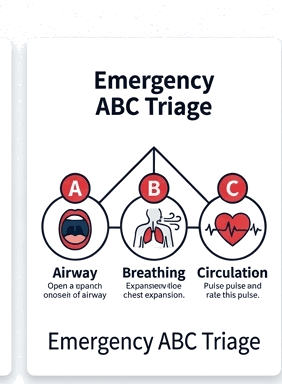
- Airway — open the mouth, gently pull the tongue forward and look for obstructions.
- Breathing — no chest movement for up to ten seconds.
- Heartbeat — nothing felt on the chest behind the elbow or at the femoral pulse inside the thigh.
If someone is with you, ask them to phone the nearest emergency vet while you begin.
Compressions
- Lay the cat on either side on a firm surface.
- Wrap one hand round the chest just behind the front legs — thumb on one side, fingers on the other.
- Use your other hand to steady the cat so it doesn't slide.
- Squeeze to compress the chest by one-third to one-half of its width, then let it fully re-expand.
- Aim for 100–120 compressions per minute (about two per second).
Breaths
After 30 compressions, give two breaths:
- Hold the mouth closed and extend the neck in a straight line.
- Cover the nose with your mouth and blow gently — just enough to see the chest rise. A cat's lungs are small.
Keep going
Repeat 30 compressions and two breaths. Check for a heartbeat every two minutes. If there's still none, keep going while someone drives you to the vet.
Be realistic, but don't hesitate
Veterinary emergency specialists recommend that bystanders start CPR immediately when it is safe to do so. Many cats will not survive, but some do — and they all need urgent veterinary care afterwards.
More videos
Sources & further reading
- PDSA (People's Dispensary for Sick Animals) — cpr for cats and kittens
- RECOVER Initiative / Journal of Veterinary Emergency and Critical Care (2026)
- Blue Cross — basic first aid for cats
This guide is general information and not a substitute for advice from your vet. If your pet is unwell or injured, contact a vet immediately.